Major-project safety · 14 September 2026
City Rail Link: what strong safety leadership looks like
Auckland’s City Rail Link shows that complex construction does not have to come with serious harm. Its strongest lesson is simple: safety performs better when it is designed into the project from the beginning.
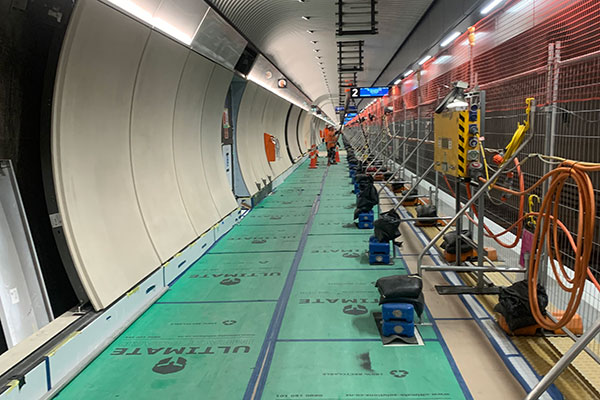
More than 21.5 million hours were worked on New Zealand’s largest transport infrastructure project with no serious injuries and only two incidents requiring hospital admission, according to WorkSafe New Zealand. That outcome deserves attention well beyond the rail and infrastructure sectors.
Safety was part of the project—not an add-on
WorkSafe worked alongside City Rail Link Limited and Link Alliance throughout construction, contributing expertise in underground construction, energy safety, occupational health, silica dust management and major-project risk management.
The important point is not simply that the regulator was involved. The project created regular contact between people at equivalent levels: inspectors worked with project managers on the ground, while leadership commitment extended from the boardroom to frontline teams. Issues could be raised early, understood in context and resolved before they became entrenched.
Complexity increases the need for disciplined leadership, worker engagement and effective controls. It does not make injury an acceptable cost of delivery.
Five lessons for construction projects and SMEs
1. Align people before work begins
Clients, designers, contractors, supervisors and workers need a shared understanding of the main risks, expected controls and decision-making process before mobilisation. A late safety plan cannot reliably correct risks already embedded in the programme, design or procurement approach.
2. Connect leadership with frontline reality
Board and senior-management commitment matters only when it reaches the workface. Leaders need reliable information about what is happening onsite, and workers need credible ways to raise concerns and influence decisions without fear or delay.
3. Focus assurance on the risks that can cause the greatest harm
Major projects can produce enormous amounts of paperwork. Good assurance concentrates first on critical risks and checks whether controls are present and effective. For the CRL, specialist attention included underground work, energy, occupational health and silica—areas where failures can have severe or long-term consequences.
4. Build trust through regular contact
Regular, practical engagement helps organisations discuss problems honestly and correct them quickly. This applies within a business as much as it does between a project and the regulator. Supervisors who only hear about safety during an audit will struggle to build the same level of trust.
5. Treat learning as part of delivery
Continuous improvement means reviewing incidents, near misses, worker feedback and control checks while work is still underway. The aim is not just to close actions. It is to understand why a weakness existed and whether the improvement will hold under real site pressure.
What good project evidence should show
Whether your organisation has 10 workers or thousands, the underlying evidence is similar:
- Critical risks are identified from the actual work and reviewed when conditions change.
- Key controls have clear owners and are checked for effectiveness—not merely listed in a register.
- Design, procurement and programme decisions consider health and safety before work begins.
- Workers and contractors can participate in decisions and raise concerns.
- Leadership receives accurate information from the workface and follows through on actions.
- Occupational health exposures such as silica, noise and hazardous substances receive the same discipline as immediate injury risks.
- Incidents, near misses and assurance findings lead to learning across the project.
The lesson for Auckland businesses
Most businesses will never operate at the scale of the City Rail Link. They can still apply the same principles proportionately: start early, define the important controls, involve the people doing the work, maintain open contact and verify that the system works in practice.
A smaller organisation can often act faster than a major project. The challenge is making time to look beyond urgent production demands and test whether today’s controls will still protect people when the job changes, pressure increases or an experienced person is absent.
How Auditsure can help
Auditsure helps Auckland SMEs, contractors, property teams and construction projects translate these principles into practical systems. Support can include a critical-risk assessment, site safety audit, site-specific safety plan, contractor assurance or an ISO 45001 gap analysis and internal audit.
The purpose is not to reproduce a megaproject system for a small business. It is to apply the same discipline at the right scale: clear responsibilities, effective worker engagement, evidence that controls work and a realistic improvement plan.
Source
This article responds to a September 2026 announcement by WorkSafe New Zealand recognising the City Rail Link’s health and safety performance. Project statistics and WorkSafe’s involvement described above are attributed to that announcement.
This article provides general information and is not legal advice. Health and safety arrangements should be based on your organisation’s work, risks, people and duties.